In 2026, cybersecurity isn’t just something the IT team worries about, it’s something every business leader needs to care about. Technology keeps getting more complex, which means threats are growing. Attackers are smarter, tools are more automated, and spotting weaknesses before they’re exploited is getting tougher.
As per Forbes, “87% of security professionals report that their organization has encountered an AI-driven cyber-attack in the last year, according to a new study by SoSafe, Europe’s largest security awareness and human risk management solution.” 87% of firms hit by AI cyber-attacks
In this article, we perform an in-depth look at the most pressing cybersecurity challenges of 2026, along with trends, examples, and expert observations shaping today’s threat landscape.
1. AI-Driven Cyberattacks: A New Era of Precision and Speed
Artificial Intelligence is transforming both sides of cybersecurity, but attackers are using it with unprecedented efficiency.
How AI Empowers Threat Actors
- Generative AI phishing: Attackers can craft compelling emails customized for individual targets in seconds.
- Automated vulnerability scanning: Bots now identify exploitable weaknesses faster than most defenders can patch them.
- Deepfake fraud: Synthetic voices and videos are being used to impersonate CEOs, authorize fund transfers, or manipulate employees.
- AI-powered malware: Modern malware adapts its behavior in real time, learning from the environment to evade detection.
Example Trend
In 2026, phishing success rates spiked because AI eliminates the grammatical errors and awkward phrasing that once gave scams away. Security teams are now fighting attacks that look and sound almost indistinguishable from genuine communication.
Why It’s a Major Challenge
AI has dramatically lowered the barrier to entry for cybercrime. Even low-skilled attackers can now launch sophisticated campaigns that overwhelm traditional defenses.
2. A Surge in Zero-Day Exploits and Vulnerability Markets
As software becomes more complex, attackers are uncovering more zero-day vulnerabilities, especially in cloud platforms, IoT systems, and widely used open-source libraries.
What’s Driving the Increase
- Complex codebases > more undiscovered bugs
- Software supply chain sprawl > more potential entry points
- Lucrative zero-day markets > financial incentives for exploit developers
- Faster exploit weaponization > shorter reaction time for defenders
The Challenge for Organizations
Zero-days often go undetected until they are exploited, forcing companies to respond reactively. Patch management cycles are becoming shorter and more demanding, overwhelming IT and security teams.
3. Cloud Security Misconfigurations Continue to Cause Major Breaches
Despite mature cloud platforms, misconfigurations remain the #1 cause of cloud-related breaches in 2026.
Common Misconfigurations
- Publicly accessible storage buckets
- Excessively permissive IAM policies
- Unsecured APIs
- Lack of network segmentation
- Forgotten cloud resources (“cloud sprawl”)
Why Misconfigurations Persist
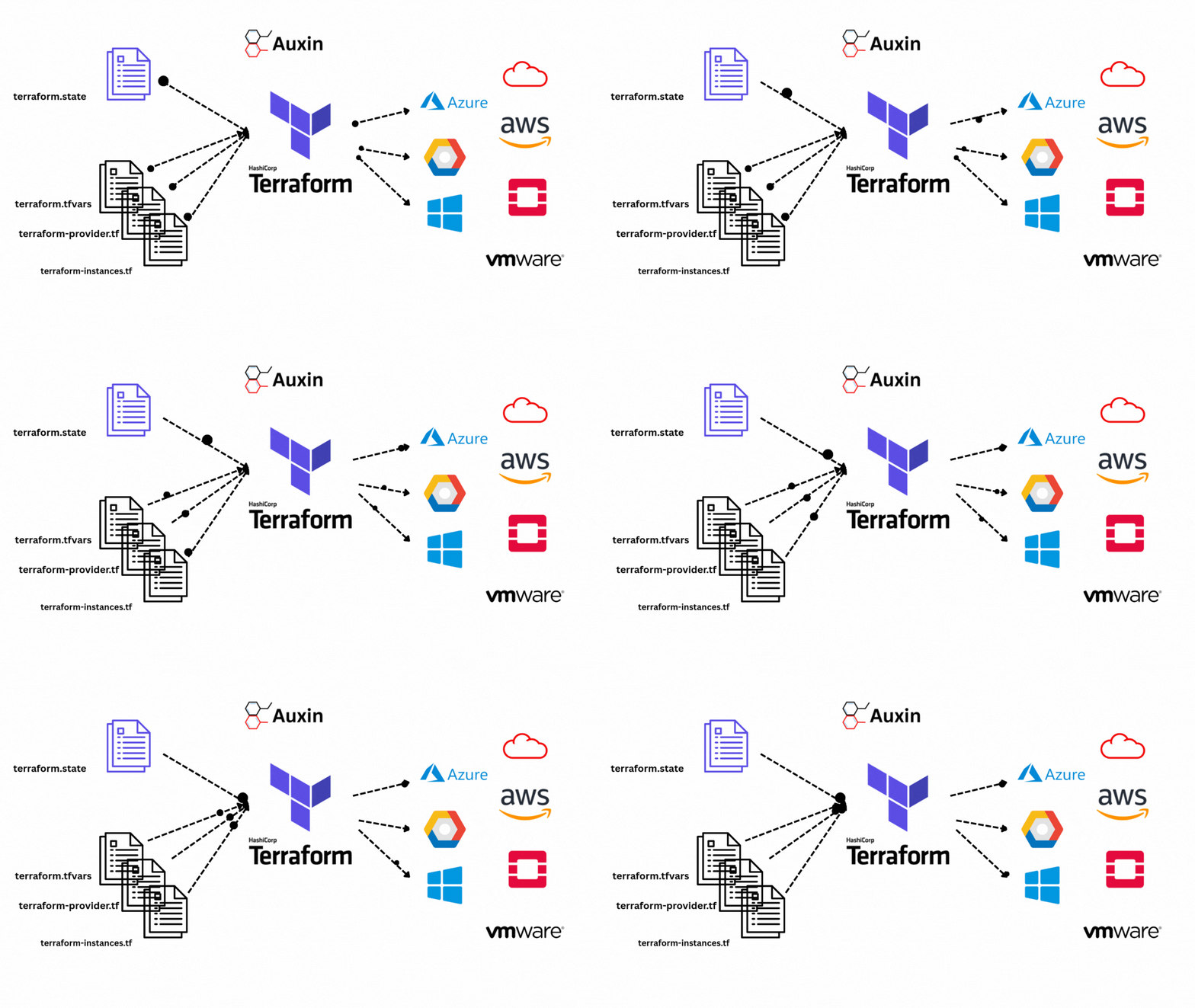
Cloud adoption has grown faster than cloud security expertise. Many companies now operate in multi-cloud environments—AWS, Azure, GCP—each with its own security model, increasing the risk of human error.
Key Observation
Attackers know that cloud mistakes are widespread, easy to find, and highly profitable, so scanning for misconfigurations has become a daily automated activity among cybercriminals.
4. Ransomware Evolution: From Chaos to Precision
Ransomware in 2026 is more strategic, destructive, and financially motivated than ever.
New Ransomware Tactics
- Double and triple extortion: Encrypt data, steal it, then threaten public release or customer notification.
- AI-enhanced target selection: Attackers pick victims based on financial capacity and security posture.
- Attacks on operational technology (OT): Factories, hospitals, energy grids, and transportation systems are now prime targets.
- Ransomware-as-a-Service (RaaS): Lower-skilled criminals rent ransomware tools, expanding global attack volume.
The Real Impact
Beyond financial loss, organizations face prolonged operational downtime, damaged reputations, and compliance violations.
5. IoT and OT Security Risks Exploding with Hyperconnectivity
The global explosion of connected devices, smart homes, industrial systems, medical equipment, vehicles, has created an enormous new attack surface.
Key IoT Challenges
- Many devices ship with weak security or no update mechanism
- Devices often operate on outdated firmware
- IoT ecosystems lack standard security frameworks
- OT environments prioritize uptime over security
- Vulnerable edge devices are used as gateways into secure networks
Critical Observation
As the lines between IT, OT, and IoT blur, a single unprotected device, such as a smart sensor, can compromise an entire organization.
6. Human Error Remains the Most Exploited Weakness
Despite improved tools, humans remain the primary target of most cyberattacks.
Why Human Vulnerability Is Growing
- More employees working remotely or in hybrid environments
- Increased digital touchpoints and communication channels
- Deepfake audio/video adds new dimensions to social engineering
- Employees struggle to distinguish legitimate requests from AI-crafted fakes
Examples of Human-Centric Threats
- Password reuse across personal and corporate accounts
- Falling for realistic voice phishing (vishing) calls
- Misunderstanding system warnings
- Oversharing information on social media
Security awareness training is improving, but attackers constantly evolved and they often use AI to tailor their manipulations.
7. Regulatory and Compliance Pressures Are Intensifying
Between global privacy laws, new cybersecurity frameworks, and stricter breach reporting mandates, organizations face a complex maze of regulations.
Growing Compliance Challenges
- Different countries impose conflicting data sovereignty laws
- New requirements demand faster incident reporting (sometimes within hours)
- Heavier fines for non-compliance increase risks for businesses
- Cloud and third-party ecosystems complicate data governance
Whether an organization operates in Europe, Asia, or the U.S., staying compliant requires continuous monitoring and collaboration between legal, IT, and security teams.
8. Preparing for the Post-Quantum Threat Era
Quantum computing isn’t breaking encryption yet—but the shift is coming, and attackers know it.
Current Risks
- “Harvest now, decrypt later” attacks are on the rise
- Sensitive long-term data (medical, government, financial) is at risk
- Organizations must modernize cryptography before quantum breakthroughs arrive
- Migrating to quantum-safe encryption is complex and slow
Why This Matters in 2026
Transitioning to post-quantum cryptography may take years. Companies that start early will be best positioned to protect long-term data confidentiality. Auxin can help accelerate this process by providing advanced cybersecurity solutions that integrate quantum-safe encryption, continuous threat monitoring, and automated compliance checks, enabling organizations to safeguard sensitive data today while preparing for tomorrow’s quantum threats.